

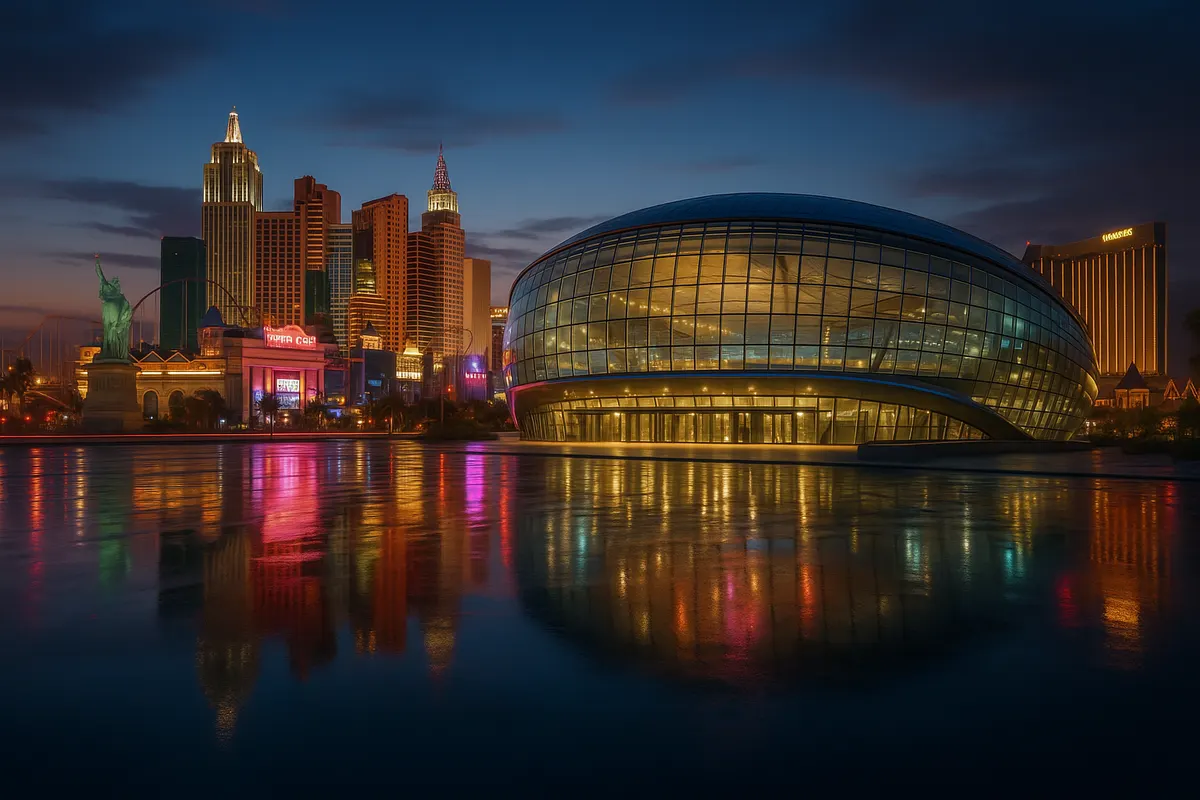
Three billionaire-backed ownership groups are left standing, the asking price is somewhere north of $12 billion, and the NBA wants a formal approval process wrapped by the end of December. That is where the league’s Las Vegas expansion story sits right now, according to ESPN reporting relayed by Casino.org. If you follow sports betting and sports expansion as connected subjects rather than separate ones, this is the clearest case study available: a major league putting a franchise in the city that was, for decades, the reason leagues claimed they needed to keep gambling at arm’s length.
Below is the way I’d actually work through a story like this, in order, so the headline number doesn’t do all your thinking for you.
Step 1: Read the price tag before the press release
ESPN reports the franchise plus its accompanying arena project is expected to command at least $12-13 billion. At the high end, that puts the whole package in the same territory as the Lakers’ record-setting $12.5 billion sale.
Two details matter more than the headline figure. First, this is a combined number: team plus building. You are not comparing it cleanly to a franchise-only sale price. Second, the arena is a feature of the Vegas bid, not a problem with it. Reporting indicates Las Vegas is positioned to be chosen ahead of Seattle partly because it needs a new arena, while Seattle’s Climate Pledge Arena is already NBA-ready. Vegas also produced the higher offers. A league weighing expansion is weighing total development value, not just an entry fee.
Step 2: Know who is bidding, and what the bids reveal
The three finalists all come with real sports operating history, which tells you the league isn’t shopping for capital alone.
| Group | Sports background | Notable detail | Market price (late Sept.) |
|---|---|---|---|
| Bill Foley & Jerry Colangelo | Foley owns the NHL’s Vegas Golden Knights and Premier League side AFC Bournemouth; Colangelo is a former Phoenix Suns owner and led USA Basketball from 2005 to 2021 | Colangelo’s “Las Vegas Jacks” bid, launched in July, merged with Foley’s interest after roughly four months of talks; the group intends to build a new arena | +110 (mild favorite) |
| Nancy Walton Laurie & Bill Laurie | Bill Laurie formerly owned the NHL’s St. Louis Blues; Nancy Walton Laurie is the daughter of Walmart co-founder James “Bud” Walton | Forbes puts their net worth near $17 billion; they keep a residence in Henderson, Nevada | +160 |
| Steve Apostolopoulos & Marc Lasry | Apostolopoulos, a Canadian billionaire, has previously pursued NBA and NFL franchise purchases, including an exploration of the Charlotte Hornets | Rounds out the shortlist as the third finalist | Not listed in the reporting |
Those prices are worth a second of math, because they show you how a market reads a closed-door process. Foley/Colangelo at +110 is 2.10 in decimal odds, an implied probability of about 47.6%. The Lauries at +160 is 2.60 decimal, roughly 38.5%. Add those together and you get about 86%, which leaves the remaining ~14% to cover the third group and the bookmaker’s margin. In other words, the market priced this as a two-horse race with an overround baked in. That is the normal structure of any betting market: prices always sum to more than 100% of true probability, and that gap is the house edge.
The Colangelo résumé is also a reminder of how fast franchise values have moved. He sold the Suns in 2004 for a then-record $401 million. The Vegas package is being discussed at roughly 30 times that number, arena included.
Step 3: Put the calendar on your wall
- End of December: the league intends to run its formal expansion approval process.
- Las Vegas first, Seattle likely second: reporting suggests the league may allow unsuccessful Vegas bidders to pivot into a Seattle process, which hints at two expansion teams rather than one.
- 2028-29 season: the targeted tip-off. An arena build is the long pole in that tent.
Treat all three as reported intentions, not guarantees. Expansion timelines slip, arena financing gets renegotiated, and approval votes get rescheduled. But the shape of the thing is now public, and that is usually when betting markets, sponsors and operators start positioning.
Step 4: Understand why sports betting and sports expansion now move in the same direction
The short version: the legal ground shifted. When the US Supreme Court struck down the federal sports betting ban in 2018, the leagues’ long-standing objection to Las Vegas lost its logic. Betting was no longer a Nevada peculiarity to be quarantined; it became a nationwide, regulated, data-hungry business that leagues participate in through official partnerships and licensed data feeds.
Las Vegas had already proven it could host. The Golden Knights arrived in 2017 and the NHL’s Vegas experiment stopped being an experiment almost immediately. The Raiders moved into Allegiant Stadium, which then hosted a Super Bowl. The WNBA’s Aces built a championship-level roster there. Formula 1 runs a street race through the city. And the NBA itself has had a Vegas presence for years through Summer League and, more recently, by staging its in-season tournament finals at T-Mobile Arena.
So the honest framing of pro sports and betting in 2020s America isn’t “leagues are getting into bed with gambling.” It’s that the market moved underneath the leagues, and a Las Vegas gambling hub is now simply the most proven events city in the country.
Step 5: Work out what actually changes in the sports betting ecosystem
Here is where readers of betting content should focus, because the practical effects are narrower than the headlines suggest.
- More recurring product in a mature market. Nevada’s betting market is old, retail-heavy and tourist-driven. An NBA team adds roughly 41 home dates a season, plus any playoff games, to a calendar that currently spikes around one-off events. Recurring inventory is better business for sportsbooks than annual spikes.
- Local-team betting becomes a daily habit, not a trip. Nevada’s mobile sign-up rules have long required an in-person account registration, which shapes how residents and visitors wager compared with app-first states. A hometown team gives both groups a reason to keep an account funded through the winter.
- Integrity policy gets tighter, not looser. The NBA’s lifetime ban of Jontay Porter in 2024 over betting-related violations showed leagues will act hard and fast, and it accelerated league pressure on sportsbooks around certain player prop markets. Expect more of that scrutiny, not less, when a franchise is based in a city where a sportsbook is never more than a short walk away.
- Sponsorship and venue economics bundle together. Arena naming, in-venue betting lounges, operator partnerships and media rights are negotiated as a package in a market like this. That is part of what a $12-13 billion valuation is pricing.
What doesn’t change: the math of wagering. Added local interest doesn’t improve anyone’s price. A bookmaker’s margin on an NBA game is embedded in the odds whether the team plays in Las Vegas or Cleveland, and over time that margin is why the house profits.
Step 6: Follow the casino city economics, because that’s the real engine
Las Vegas resorts don’t make their money from the game. They make it from the reason you came to town. Casino city economics works on visitation: hotel occupancy, food and beverage, show tickets, and gaming floor traffic. A major event lifts all of those at once, which is why the city chased a Super Bowl and an F1 race in the first place.
An NBA franchise is a different instrument. It trades the single giant spike for dozens of mid-sized, predictable weeknight and weekend demand bumps across five or six months, exactly when the city needs filler between conventions and headline events. That is also why a new arena is attractive rather than burdensome to the people underwriting it: a building is a controllable asset with its own concert and event calendar, and whoever owns it captures the surrounding real estate upside.
Which brings the two threads together. Sports league expansion into Las Vegas is not primarily a betting story. It is a real estate and visitation story that happens to sit on top of the most sophisticated sportsbook market in the country, and that overlap is what makes the sports betting ecosystem there unusual.
Your watch list from here
If you want to track this without reading every rumour, three things are worth your attention. Whether the December approval process actually lands in December. Whether the Seattle pivot for losing bidders is confirmed, which would turn one expansion into two and reshape the league’s conference map. And where the Vegas arena is sited, because the location tells you which resort operators stand to benefit and which were left out.
Common questions
Why would the NBA pick Las Vegas over Seattle?
Reporting points to two reasons: the Vegas bids were higher, and the city requires a new arena, which adds development value the league can shape. Seattle’s Climate Pledge Arena is already equipped for an NBA team, so it can wait.
When would a Las Vegas NBA team start playing?
The league has targeted the 2028-29 season, with the formal expansion approval process planned for the end of December. Arena construction is the main variable.
Does a hometown team change betting rules for fans?
No. State regulations and league integrity policies govern what markets are offered and who may bet. Players, coaches and team staff face strict restrictions; ordinary bettors face the same rules they already do in Nevada.
A note on playing responsibly: every sportsbook price includes a built-in margin, so betting is entertainment with a long-run cost, never an income strategy. Set deposit and loss limits before you wager, keep stakes to money you can afford to lose, and use self-exclusion or cool-off tools if betting stops feeling like a choice. Support services are available in every regulated market.
Leave a comment