

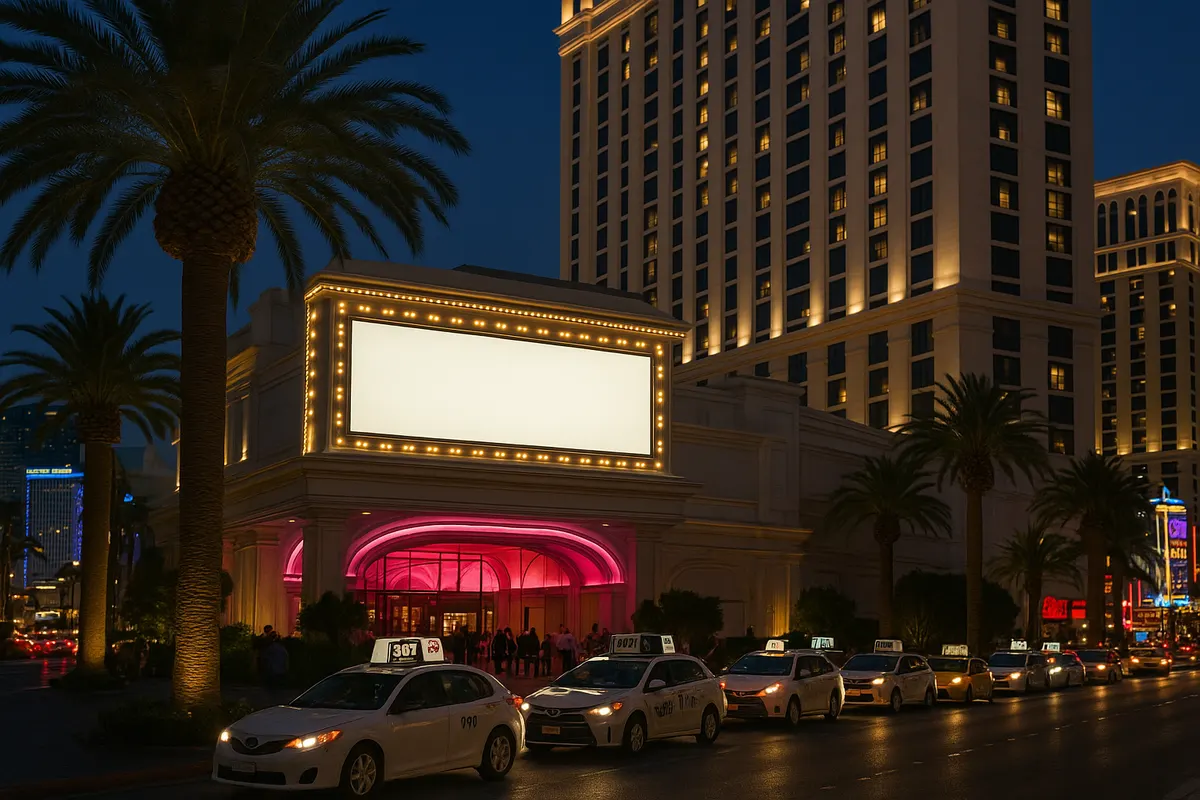
Would you pick a Strip hotel because of whose name is on the building? Plenty of travellers now do, and that single behavioural shift explains why celebrity casino hotels have become one of the more interesting bets in Las Vegas hospitality. My argument is simple: these partnerships are not vanity projects. They are a distribution strategy. A famous name attached to a property buys something a marketing budget struggles to buy outright, which is an existing, emotionally invested audience that already knows the brand and will travel to see it in person.
The casino math behind the walls does not change. What changes is who walks through the door, how long they stay, and how much of their money ends up outside the gaming floor.
What are celebrity casino hotels?
A celebrity casino hotel is a gaming property whose identity, design and marketing are built around a named public figure rather than around the operator’s own house brand. The celebrity typically licenses their name and personal aesthetic, shapes the interiors and food and drink concepts, and acts as the property’s public face, while the casino operator retains the gaming licence, the floor and the balance sheet.
That last part matters. In a traditional casino resort, the brand is the operator: Caesars Palace, Bellagio, MGM Grand. The promise is the house itself, built over decades of advertising and loyalty programme spend. In a celebrity-branded property, the promise is a person, and the operator borrows the audience attached to them.
It helps to separate three models that often get lumped together:
- Licensed entertainment brands such as Hard Rock or Planet Hollywood, where the theme is a media property rather than an individual.
- Chef and designer hotels-within-hotels, like the Nobu Hotel inside Caesars Palace, where a premium name occupies a defined block of rooms and restaurants.
- Personality-led rebrands, where a whole property is restyled around one individual’s taste and public persona. This is the newest and riskiest of the three.
| Dimension | Traditional casino resort | Celebrity casino hotel |
|---|---|---|
| Primary brand asset | Operator’s own name and loyalty database | A person’s public following |
| Main marketing channel | Paid media, player clubs, travel trade | Social media, television, earned press |
| Guest expectation | Consistency and service standards | Personality, novelty, photographable rooms |
| Biggest risk | Commodity competition on price | Reputational and relevance risk tied to one individual |
| Typical contract | Owned or managed under house flag | Licensing and partnership agreement with term limits |
The Vanderpump Hotel: a live test of the model
The clearest current example sits on the Strip. The former Cromwell reopened on 11 June 2026 as the Vanderpump Hotel Las Vegas, the latest step in Lisa Vanderpump’s partnership with Caesars Entertainment. It follows a staircase of smaller concepts with the same operator: Vanderpump Cocktail Garden at Caesars Palace, Vanderpump à Paris at Paris Las Vegas, and Pinky’s at the Flamingo.
| Concept | Caesars property | Scale |
|---|---|---|
| Vanderpump Cocktail Garden | Caesars Palace | Single venue |
| Vanderpump à Paris | Paris Las Vegas | Single venue |
| Pinky’s | Flamingo Las Vegas | Single venue |
| Vanderpump Hotel Las Vegas | Former Cromwell site | Full property rebrand, opened June 2026 |
That progression is the interesting bit. Caesars did not hand over a hotel on day one. It tested the brand’s drawing power at venue scale across three properties before committing a whole address to it. Anyone studying partnership structures should read that as the sensible sequence: prove the audience converts into covers and bar spend, then escalate.
Why the Bravo connection is the real engine
Bravo produced a three-part special, Vanderpump Rules: Lisa Las Vegas, following the rush to open the property. Its first two episodes aired on 20 October, with the finale the following night and streaming on Peacock a day behind each broadcast. The trailer is built around construction chaos: holes in the ceiling, crumbling stone columns, an unfinished bar and chandelier, and carpets stuck in customs two weeks before opening.
Caesars executives including chief executive Tom Reeg, chief operating officer Anthony Carano and regional president Sean McBurney appear in the footage. That is not incidental. A hotel opening is normally a trade story; here it became hours of prime-time narrative television with the operator’s leadership inside the frame. Reality programming of this kind is curated, so nobody should mistake it for journalism, but as a marketing instrument it delivers something a billboard on Interstate 15 cannot: a story viewers follow before the doors open, with named rooms and lounges they can later visit. The Giggy lounge, named for Vanderpump’s late dog, is a small example of how personal mythology becomes a floor plan.
Who the property is actually chasing
The target guest here is not the high-limit baccarat player. It is a younger, largely female, highly social audience that discovered the brand through television and social feeds, travels in groups, books celebration trips, and spends heavily on food, drink and photographs. That cohort has historically been under-served by Strip properties built around gaming-floor economics and male-skewed sportsbook marketing.
What changes when a name goes on the building
Demographics
Celebrity branding shifts the entry point. A visitor who comes for a specific cocktail garden or a televised hotel is making a destination choice, not a price comparison. That tends to bring more first-time Strip visitors, more weekend and group bookings, and more guests whose itinerary is planned around venues rather than around gambling sessions. Some of them will try the tables; many will not.
Revenue mix
Las Vegas resorts have spent two decades shifting their income away from gaming and towards rooms, dining, nightlife and entertainment, and non-gaming lines now carry a very large share of Strip resort revenue. Celebrity partnerships push in exactly that direction. They raise average spend per guest through high-margin food and beverage, they support premium room rates during launch windows, and they generate earned media that reduces customer acquisition cost.
Be honest about the limits. A famous name does not alter the mathematics of the games. American double-zero roulette carries a 5.26% house edge, the European single-zero wheel 2.7%, and most Strip slot machines return somewhere around 94% to 97% of wagers over millions of spins, with the remainder forming the house’s margin. Outcomes are produced by a random number generator and each round is independent of the last. Branding changes footfall and atmosphere, nothing more. If the venue is doing its job commercially, it is doing so through volume and non-gaming spend.
Entertainment partnerships as a design brief
Past the gaming floor
The celebrity hotel is one branch of a wider pattern. Caesars Palace built a long-running residency business at the Colosseum with artists such as Celine Dion and Adele. Operators across the Strip have handed restaurant space to chefs with television profiles, licensed intellectual property for themed attractions, and built arenas and stadium partnerships into resort districts. In each case the logic is the same: the gaming floor is no longer the reason most visitors choose a property, so the property buys other reasons.
Designing for the share, not just the spin
Personality-led properties are designed to be photographed. Pink marble, oversized florals, statement staircases and a signature animal statue are not decoration for its own sake; they are distribution. Every guest post functions as advertising, which is why these interiors look maximalist next to the restrained luxury of an older house-brand resort. The practical trade-off is that highly stylised, trend-sensitive design ages faster and needs refreshing sooner than neutral five-star finishes.
What separates the partnerships that last from the ones that quietly disappear
Four factors do most of the work.
- Genuine brand alignment. The celebrity’s existing associations have to match the product. Vanderpump’s public identity has been built around restaurants, cocktails and interiors for years, so a hotel is a logical extension rather than a rented signature.
- An audience that travels. Fame alone is worthless to a resort. The question is whether the following is large, loyal and willing to spend on a trip.
- Operational control in the right hands. The operator should run the casino, compliance, housekeeping and revenue management. The celebrity contributes concept, design and attention. Blur those lines and service standards slip.
- A believable level of involvement. Audiences detect absentee branding quickly. Properties that fail usually fail because the name turned out to be a logo on a door.
The structural risk is concentration. A house brand survives bad press about one executive; a property named after an individual inherits that person’s reputation, career trajectory and cultural relevance. Licensing deals with defined terms and rebranding rights exist precisely because tastes move on.
Where this trend goes next
Expect more escalation ladders rather than more moonshots. The Vanderpump sequence, from a single cocktail venue to three venues to a full property, is a template other operators can copy with musicians, athletes, chefs and creators who own large direct audiences. Expect shorter licence terms, performance-linked agreements, and more properties designed for conversion into a different brand later. Expect the competitive ground to keep shifting from gaming floor size to content, because a hotel that can generate its own television series or viral format has a marketing channel competitors cannot buy.
What will not change is the arithmetic. If you are visiting any of these properties, treat the gambling as paid entertainment with a known cost rather than a way to fund the trip, set a budget before you arrive, and use the deposit and session limits operators provide. Enjoy the pink marble. Just know who the house is.
Frequently asked questions
What are celebrity casino hotels?
Gaming properties branded around a named public figure, who licenses their name, shapes the design and food and drink concepts, and fronts the marketing, while the casino operator holds the licence and runs the business.
How do celebrity brands affect casino tourism?
They broaden the visitor mix, drawing younger and more group and celebration travel, and shift spend towards dining, nightlife and rooms rather than the gaming floor.
Why do casinos partner with celebrities?
To acquire an existing audience cheaply. Earned media, television specials and social reach lower customer acquisition cost and help a property stand apart on a street full of large resorts.
What makes celebrity hotel ventures successful?
Credible alignment between the person and the product, a following that actually travels and spends, real creative involvement, and an operator that keeps control of service and compliance.
Leave a comment